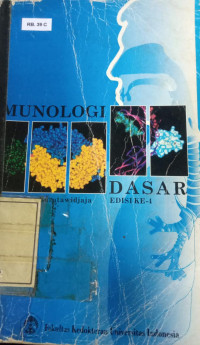
Buku Teks
Imunologi Dasar Edisi keempat
Immunology is a discipline whose development is rooted in the prevention and treatment of infectious diseases. Successes in the development of immunology have been able to eradicate polio in almost all countries and eliminate the dreaded smallpox disease from this earth. Since 1960 immunoogy has become a broader discipline that is not only limited to the eradication of infectious diseases. Dysfunctions of the immune system that play a role in the pathogenesis of various diseases are increasingly recognized. Immunology continues to evolve rapidly at both the cellular and molecular levels. All immune responses are initiated by antigens and to elicit an immune response, the antigen must first be presented by APC (Antigen Presenting Cell) cells to immune system cells (T cells). To be recognized by T cells, the antigen can only be presented in association with MHC molecules. Other molecules such as receptors, co-receptors are also required for antigen presentation. Mediators released in immune responses that occur in allergies, both acute and chronic, as well as cytokines and adhesion molecules released by activated cells that play a role in leukocyte migration and inflammation are also known.
Translated with DeepL.com (free version)
Ketersediaan
| 2400700830 | 616.01 KAR i | Perpustakaan Terpadu - Polkesjati (RB. 39 C) | Tersedia |
Informasi Detail
- Judul Seri
-
-
- No. Panggil
-
616.01 KAR i
- Penerbit
- Jakarta : FKUI., 2000
- Deskripsi Fisik
-
xxi, 315 hal: 15 x 24 cm.
- Bahasa
-
Indonesia
- ISBN/ISSN
-
973-496-214--7
- Klasifikasi
-
616.01
- Tipe Isi
-
-
- Tipe Media
-
-
- Tipe Pembawa
-
-
- Edisi
-
ed.4
- Subjek
- Info Detail Spesifik
-
-
- Pernyataan Tanggungjawab
-
-
Versi lain/terkait
Tidak tersedia versi lain
Lampiran Berkas
Komentar
Anda harus masuk sebelum memberikan komentar
 Karya Umum
  Filsafat
  Agama
Agama  Ilmu-ilmu Sosial
  Bahasa
  Ilmu-ilmu Murni
  Ilmu-ilmu Terapan
  Kesenian, Hiburan, dan Olahraga
  Kesusastraan
  Geografi dan Sejarah