
Farmakoterapi penyakit diabetes melitus tipe 2
Diabetes mellitus (DM) is currently one of the leading causes of death worldwide. Managing this disease requires collaboration among all parties to achieve the desired therapeutic outcomes. Given t…
- Edisi
- Cetakan pertama
- ISBN/ISSN
- 978-623-02-6932-5
- Deskripsi Fisik
- x, 77 halaman : ilustrasi ; 21 cm.
- Judul Seri
- -
- No. Panggil
- 615.1 TIN f

Farmakologi Kebidanan (Edisi Revisi)
This book is a comprehensive guide for midwifery practitioners in understanding the use of drugs in midwifery practice. With an emphasis on specific pharmacology relevant to pregnancy, labor, and t…
- Edisi
- -
- ISBN/ISSN
- 978-602-2002-378-4
- Deskripsi Fisik
- iv 213 hlm.: 24 cm
- Judul Seri
- -
- No. Panggil
- 615.507 1 ELL f
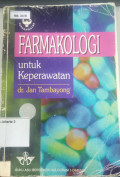
Farmakologi untuk keperawatan
Nursing pharmacology: the study of medicines and how they affect the human body, particularly in the context of nursing care. This involves understanding how medicines work, their side effects, dru…
- Edisi
- -
- ISBN/ISSN
- 9795190970
- Deskripsi Fisik
- ix, 155 halaman ; 21 cm
- Judul Seri
- -
- No. Panggil
- 615 TAM f
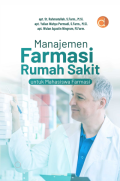
Manajemen farmasi rumah sakit untuk mahasiswa farmasi
The book "Hospital Pharmacy Management for Pharmacy Students" was prepared by the author for pharmacy students who want to learn the ins and outs of pharmacy management, particularly medication man…
- Edisi
- Cetakan pertama
- ISBN/ISSN
- 978-623-02-7321-6
- Deskripsi Fisik
- viii, 59 halaman : ilustrasi ; 23 cm.
- Judul Seri
- -
- No. Panggil
- 615.068 5 RAH m

Buku saku pelayanan kefarmasian
This book can be used as a reference and guide to the basics of pharmaceutical care. Its strength is that it provides accurate information regarding basic pharmaceutical care. It is easy to underst…
- Edisi
- Cetakan pertama
- ISBN/ISSN
- 978-623-02-6572-3
- Deskripsi Fisik
- vi, 73 halaman : ilustrasi ; 23 cm.
- Judul Seri
- -
- No. Panggil
- 615.1 ELE b
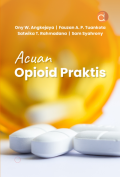
Acuan opioid praktis
Opioids are the most commonly used drugs to treat patients with severe pain. These drugs are derived from the Papaver somniferum plant, which was extracted and widely used in ancient Persia, Egypt,…
- Edisi
- Cetakan pertama
- ISBN/ISSN
- 978-623-02-7697-2
- Deskripsi Fisik
- viii, 68 halaman : ilustrasi ; 23 cm.
- Judul Seri
- -
- No. Panggil
- 615.1 ONY a

Komunikasi efektif dalam pelayanan kefarmasian
Healthcare workers, particularly pharmacists, must possess the skills to listen to patients, gather information, provide information, understand patients, and educate them. These elements will be a…
- Edisi
- Cetakan pertama
- ISBN/ISSN
- 978-623-02-6679-9
- Deskripsi Fisik
- viii, 67 halaman : ilustrasi ; 23 cm.
- Judul Seri
- -
- No. Panggil
- 362.178 2 NIP k

Farmakologi 1 untuk Mahasiswa Farmasi
Pharmaceutical pharmacology is a branch of pharmaceutical science that studies the interactions between drugs and the human body, including how drugs work, their effects, and the factors that influ…
- Edisi
- -
- ISBN/ISSN
- 978-602-202-345-6
- Deskripsi Fisik
- xiv+ 298 hlm. : 21 cm
- Judul Seri
- -
- No. Panggil
- 615.1 TAT f

Rujukan cepat obat dan pemberian obat pediatrik
The book covers about 25 common pediatric drugs, presented in an accessible format: classification, dosage form, mechanism of action and use, route and dosage per age/weight, side effects, contrain…
- Edisi
- -
- ISBN/ISSN
- 978-979-448-774-7
- Deskripsi Fisik
- vi, 90 halaman ; 14 cm
- Judul Seri
- -
- No. Panggil
- 618.92 BIN r

Basic pharmacology and drug notes 2023 edition : make it easy only with Medic…
Medical Mini Notes Pharmacology and Drugs contains: - Basic principles of pharmacology - Drug use in pregnancy and lactation - Autonomic nervous system - Drugs affecting the gastrointestinal tr…
- Edisi
- -
- ISBN/ISSN
- -
- Deskripsi Fisik
- 487 halaman : ilustrasi ; 15 cm.
- Judul Seri
- -
- No. Panggil
- 615 MED b



 Karya Umum
 Filsafat
 Agama
 Ilmu-ilmu Sosial
 Bahasa
 Ilmu-ilmu Murni
 Ilmu-ilmu Terapan
 Kesenian, Hiburan, dan Olahraga
 Kesusastraan
 Geografi dan Sejarah